Sixteen questions were answered from up to 7,522 respondents, voicing people’s opinions from visitation frequency to most important pilot option
Survey results are in for Boulder County Parks & Open Space’s (BCPOS) proposal to test alternating-day trail use on multiple trails in Boulder County.
The pilot program, if enacted, would separate cyclists, hikers, and horseback riders onto designated days at select multi-use trails.
But the public has spoken and the pilot program could be running into a wall of public opposition, at least according to the results from a month-long community survey released Thursday, June 26.
The online survey was open from April 20 to May 19. It drew up to 7,522 responses, making it one of the larger community feedback efforts the department has conducted.

When respondents were asked directly about their support or opposition to an alternating use pilot, 75% of respondents said they were opposed, with 61% describing themselves as “strongly” opposed. Only 18% expressed support.
That opposition wasn’t evenly distributed either.
The survey skewed heavily toward frequent cyclists, with 55% of respondents naming biking as their primary activity, more than double the share who said hiking or walking was their primary activity.
Not surprisingly, cyclists expressed the strongest resistance to the pilot, with 89% opposed. Horseback riders told a different story entirely, with 66% of respondents supporting the idea, the highest backing of any user group, followed by wildlife viewers at 63%.
Supporters of the pilot frame it as a safety and stress-reduction measure for slower-moving or more vulnerable trail users. Opponents, concentrated among bikers, see the pilot as a targeted restriction on their access, dressed up as a fairness measure.
Here is a break down, question by question, of the survey:
Question 1 — Frequency of Visitation: In the past 12 months, about how often have you visited Boulder County Parks & Open Space?
Of the 7,509 respondents surveyed, 91% said they visit BCPOS at least once monthly and 70% said they visit weekly or more.

Q2 — All Activities: Which activities do you typically participate in when visiting Parks & Open Space?
The survey found that the activity of hiking/walking (80%) and biking (79%) are the two most common activities reported by the 7,345 respondents. The survey found other activities distantly followed the two most common activities, which was running (32%), bringing a dog (31%), with horseback riding registering at just 3%.

Q3 — Primary Activity: What one activity do you do most frequently when visiting Parks & Open Space?
Despite Q2’s near-tie, when asked for their single primary activity, 55% of the 7,340 respondents chose biking versus 27% for hiking/walking. This signals 2:1 the survey draws disproportionately from the biking community for its strongest opinions.

Q4 — Social Values Conflict Rating: In general, to what extent do you think each of the following is a problem on Parks & Open Space?
Across the 7,287 respondents, most people said discourteous or unsafe behavior is “never” or “rarely” a problem for any user group. Bikers were perceived as the least safe (36% sometimes/often/almost always unsafe) while horseback riders were seen as the safest and most courteous group.

Q5 — Opinion on Pilot: In general, please indicate your level of support or opposition for an alternating use pilot on select Parks & Open Space trails.
The survey recorded that 75% of the 7,034 respondents oppose an alternating use pilot (61% strongly oppose), while only 18% support it. Support varied sharply by activity — 89% of bikers opposed it versus just 17% of horseback riders, who were the most supportive group at 66%.


Q6 — Preferred Location for Pilot: Which of the following parks would you choose as your top choice for a potential alternating use pilot.
The survey recorded 67% of the 7,073 respondents said they don’t want a pilot at any park. Among those who did pick a location, Betasso Preserve (9%) and Heil Valley Ranch (7%) were the top choices.

Q7 — Preferred Trails by Location: If the pilot were to take place at [preferred location selected], which multi-use trails should be included in the pilot?
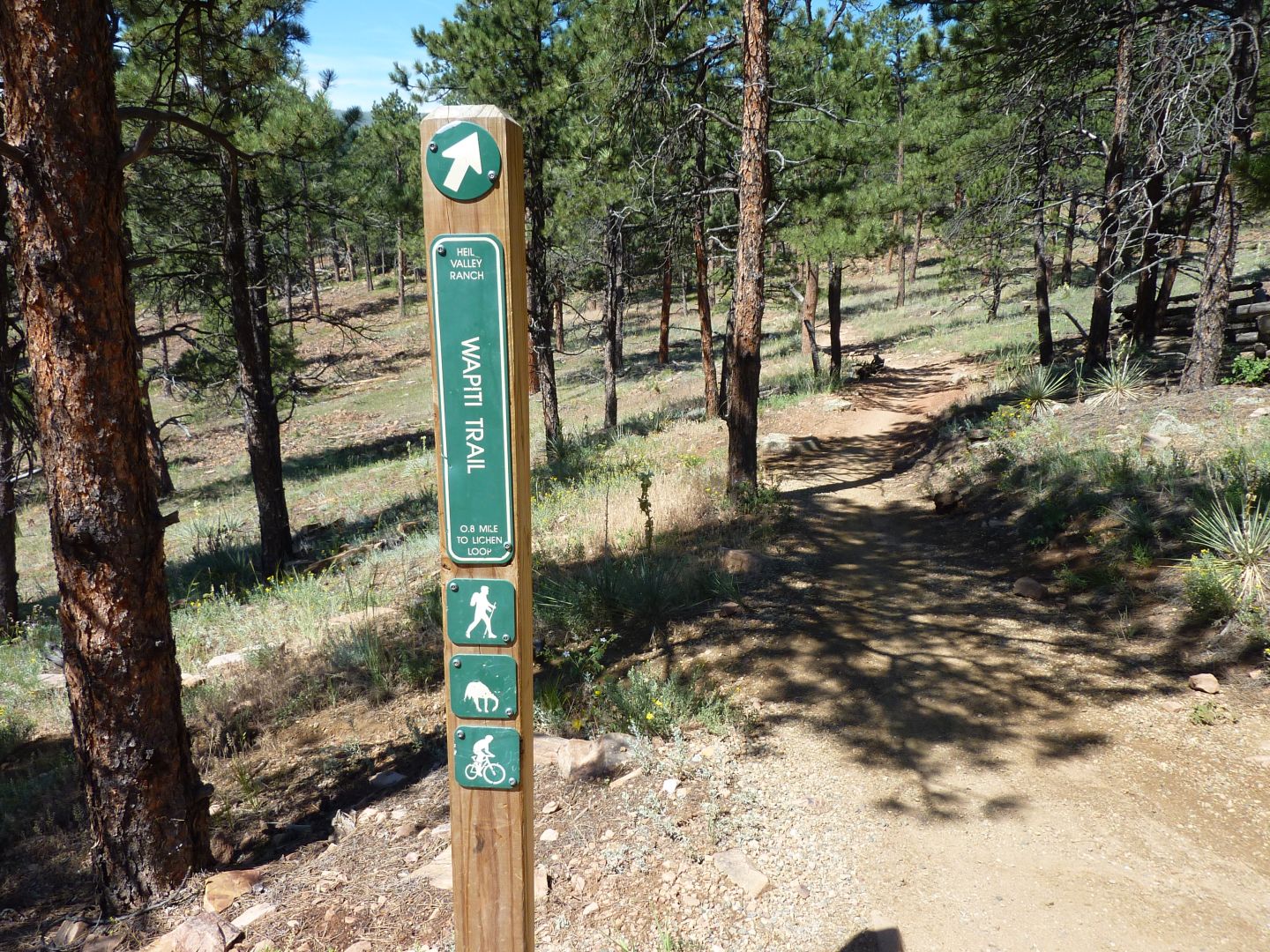
For the minority who selected a location, specific trail preferences emerged: Wapiti Trail at Heil Valley Ranch, Bitterbrush Trail at Hall Ranch, Walker Ranch Loop at Walker Ranch (74%), and Canyon Loop/Benjamin Loop at Betasso Preserve.

Q8 — Pilot Options Rating: How important are each of the following options in an alternating use pilot?
Respondents valued keeping some days fully multi-use (40% rated “very important”) far more than designated single-use days. Hiking/horseback-only days ranked least important, with 56% calling them “not important” at all.

Q9 — Most Important Pilot Option: Which of the options would be most important for you to see in an alternating use pilot?
The survey recorded that 63% of 6,862 respondents said they don’t want a pilot at all. Among those open to one, biking-only days (16%) edged out hiking/horseback-only days (12%) as the most desired single option.

Q10 — Preferred Alternating Use Schedule: Please select your preferred alternating use schedule for allowing separate days for different activities.
The survey recorded that 70% of 6,772 respondents want no alternating schedule whatsoever. Of those open to one, specific days of the week (14%) were slightly preferred over an odd/even day rotation (11%).


Q11 — Alternating Use Schedule Seasonality: Should an alternating use schedule be implemented year-round or only during certain seasons?
The survey recorded that 72% of 6,795 respondents reject any alternating schedule, year-round or seasonal. Among the minority open to seasonal scheduling, summer was the overwhelming choice (64%), often described as “May – October” or “Memorial Day to Labor Day.”


Q12 — Pilot Outcomes for Measurement: If we conduct the alternating use pilot, Parks & Open Space will evaluate what makes the program successful. Which of the following outcomes do you think should be measured?
Of 5,837 respondents, 54% want visitor satisfaction tracked as the key success metric, followed by reduced user conflict (42%) and reduced crowding (31%). Many open-ended responses cautioned that “less crowding” shouldn’t be confused with restricted access.


Q13 — Alternating Use as a Long-term Approach: If overall outcomes following the pilot are positive, should Parks & Open Space consider implementing the alternating use approach long-term?
The survey found that 58% of the 6,537 respondents say alternating use should not become permanent, even if the pilot goes well. Only 22% would support making it long-term, with 20% undecided.

Q14 — Residency: Where do you live?
The survey found 84% of 6,696 respondents live in Boulder County, with 41% from the city of Boulder alone and another 12% from Longmont. 16% live outside the county entirely.

Q15 — Age: What is your age?
Respondents skew solidly middle-aged: 51% are between 35–54 years old, and 31% are 55 or older. Fewer than 3% are under 25.

Q16 — Race or Ethnicity: Which of the following best describes your race or ethnicity?
The survey found that 76% of 6,586 respondents identified as White, and another 19% declined to answer — leaving under 10% identifying across all other categories combined, led by Hispanic/Latino respondents at 3%.

Further analysis from the survey
Which location is suited best for a pilot
Among the roughly one-third of respondents willing to consider a pilot location at all, Betasso Preserve was the top pick at 9%.
Heil Valley Ranch at 7% was picked next, but the dominant answer to “where should this pilot happen” was simply: nowhere. Sixty-seven percent said they didn’t want a pilot at any county park.
The pattern repeated itself on every downstream question too.
Respondents said when asked which scheduling approach they’d prefer, 70% said they wanted no alternating schedule at all. When asked whether it should run seasonally or year-round, 72% rejected the entire premise.
Lastly, among the minority open to a seasonal approach, summer was by far the most-cited window, with 64% of respondents specifically suggesting Memorial Day through Labor Day.
Who responded
The survey’s demographics help explain its tilt.
Eighty-four percent of respondents live in Boulder County, with 41% from the city of Boulder alone. Respondents were also overwhelmingly white (76%), and middle-aged with just over half between 35 and 54 years old.
Boulder County itself noted that the results aren’t statistically representative of the broader population, because it was a self-selected survey not a randomized sample. But officials say it’s still a useful gauge of sentiment among the county’s most active and engaged trail users.
The Commissioners’ Work Session is scheduled for 1 p.m., June 30 in the Commissioners’ Hearing Room, 1325 Pearl Street, Boulder. During that session, the commissioners may make a decision about the pilot program.
Discover more from Rocky Mountain Journal
Subscribe to get the latest posts sent to your email.