
Jim Hurrell speaks to importance of keeping the atmospheric science lab in Boulder intact
On Dec. 17, 2025, the National Science Foundation (NSF) announced its intent to restructure critical weather science infrastructure at the National Center for Atmospheric Research (NCAR).
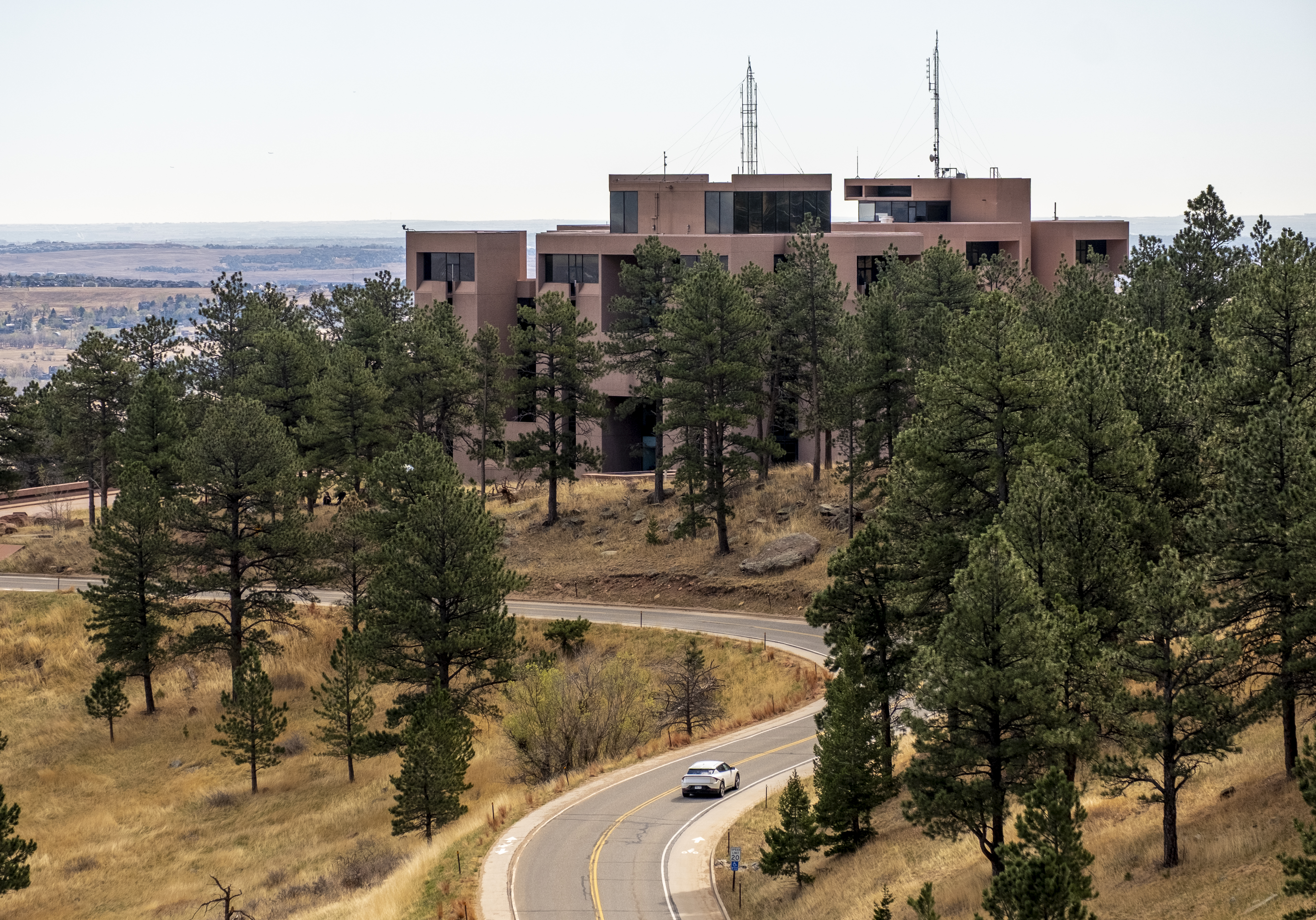
This intent would affect the seven labs, including the Mesa Lab building in Boulder, the NCAR-Wyoming Supercomputing Center (NWSC) in Cheyenne and the Mauna Loa Solar Observatory atop Mauna Loa in Hawaii.
The announcement said in part “NSF remains committed to providing world-class infrastructure for weather modeling, space weather research and forecasting. To do so, NSF will be engaging with partner agencies, the research community, and other interested parties to solicit feedback for rescoping the functions of the work currently performed by NCAR.”
On Jan. 23, 2026, the NSF then sent out a “Dear Colleague Letter” asking the scientific community for input on how to dismantle NCAR, giving the community until March 13 to respond back.
The responses back to the NFS were plentiful.
In total, 56 letters were submitted with over 1,000 individual signatures, including 82 members of Congress, all expressing and explaining reasons why the dismantling should not occur.
One letter penned from seven former NCAR directors explains their position as to why NCAR is needed.

The letter said in part, “By bridging the gap between fundamental research and operational application, NSF NCAR generates immense economic value for the Nation, proving the foundational intelligence that protects commerce, reduces disaster-related losses, and optimizes weather-sensitive industries like energy, insurance and logistics.”
The former directors also said in the letter they recognize that institutions must periodically evolve, but any path that leads to fragmenting or dismantling NCAR would be fundamentally not in the nation’s interest.
Jim Hurrell offers input on the Dear Colleague Letter

Former NCAR director Jim Hurrell (2013-18) spoke to the Rocky Mountain Journal about the NSF’s proposed actions.
He explained why NCAR is vital to the nation as well advice he communicates to his students in the classroom. Hurrell is a Professor of Atmospheric Science at Colorado State University (CSU) in Fort Collins.
“NCAR does a broad range of work at the intersection between fundamental academic type research – trying to understand the system and how the system works with the system being the atmosphere and how the atmosphere interacts with other parts of the earth,” Hurrell said.
One example Hurrell said is how NCAR research helps airports detect wind shear.
Air travel in the 1970s and 80s was dangerous at some airports around the country. Hundreds of people died in plane crashes caused by microbursts, which are powerful columns of sinking air often accompanying thunderstorms.
On Aug. 7, 1975 Continental Airlines Flight 426 crashed during takeoff from then Denver-Stapleton International Airport due to severe wind shear from a thunderstorm. Miraculously all 134 people aboard the flight survived the 100-foot drop to the ground.
“Going back to the 70s and 80s, there were a lot of airline crashes,” Hurrell said. “There would be no rain in the area, it was clear, no thunderstorms but what we call(ed) clear-air turbulence.”
Then in 1978, NCAR scientists, along with meteorologist Tetsuya Fujita (the Fujita scale), captured the first microbursts on radar, confirming Fujita’s theory about their existence. But the aviation industry was skeptical of the microbursts’ existence for years as airplane crashes continued and more people died.
“NCAR encouraged that technology, developing the systems that really improved aviation safety,” Hurrell said.

Another example to NCAR’s benefit Hurrell said was a forecasting system NCAR developed that its sister weather agency the National Oceanic and Atmospheric Administration (NOAA) uses.
NOAA, working along side the National Weather Service (NWS), produces daily weather forecasts millions of Americans use each day. Those forecasts are then collected by third-party companies that build weather apps that those millions of Americans use daily as well.
“These are examples of how the basic research at NCAR ultimately is translated into benefits that protect people and lives and property, and bring economic benefits to the nation,” Hurrell said.
NCAR has been under fire for months from the Trump administration, which claims climate science is a hoax.
Some people have suggested that the White House’s wish to dismantle NCAR could be a response to the feud between Trump and Colorado Democratic leaders because of how the state is handling the Tina Peters investigation of election fraud during the 2020 presidential election.
Regardless of those suggestions, Hurrell said the NSF sending a “Dear Colleague Letter” to its funded institutions isn’t unusual.
But, the NSF letter did seem to focus on the current administration’s proposal to dismantle NCAR, saying that “NCAR is the center of climate alarmism.”
Hurrell begs to differ.
“We haven’t even talked about the climate change research yet because that’s just a small fraction of what NCAR had done over time.”
In Hurrell’s personal opinion, he thought there was an important thing people affiliated with the issues could look at.
Hurrell said he thought it wasn’t just the NSF saying “OK, the administration has asked us to reconfigure NCAR and that’s it,” but thought the NSF could be asking, “We think there could be promise in distributing NCAR across other entities that can do this kind of research, please send us your best ideas on how to do that.”
Hurrel also said he couldn’t say that the NSF did not receive letters that said “I propose that this part of NCAR transition to this organization, and this is what this organization should bring to the table.”
However, Hurrell said he was confident that the vast majority of the letter have simply stated they oppose the break up of NCAR.
NCAR has been operating since 1960, and according to Hurrell, “it’s just unfathomable to think about why we would break something like this up. The NSF always viewed NCAR as one of its best examples of a FFRDC, a federally funded research and development center.”
NCAR was implemented as a laboratory because the research community wanted it in the first place, according to Hurrell. This included needs to access scientific research from colleges and universities.
Those education institutions don’t have the funding to perform large-scale weather and climate science like NCAR can.
“I’m now at a university. I write a proposal to the NSF to do a research project, I might get three years of funding to support a few students to some research,” Hurrell said. “But that’s just little chunks of money.”
Hurrell said that the university communities approached the NSF in the late 1950s, telling them the problems they were working on in atmospheric science sounded complex with big challenges needing large solutions to solve the problems.
“What we needed was a national center that can provide the capabilities we needed, like big computing centers,” Hurrell said, reiterating what was said in the response letter. “Colorado State can’t buy a super-computer like NCAR’s.”
As for Hurrell’s CSU students studying climate science, Hurrell remains positive in his message to them.
“I’ve had students come to me and ask ‘should I stay in the field?’ or ‘what do you think the prospects are for me if I stay in this field?’,” Hurrell said. “I try to encourage the students to keep their head down, control what they can control, which right now is their studies and research, and learning how to do the research.”
Hurrell’s reply back to them is there’s still demand for the kind of information they are collecting and the work is important and the research has value, and those two facts are not going to change.
“I have to believe that this is a shorter-term blip rather than a long-term, multi-year or decadal change,” he said. “I’m optimistic it can because of the nation’s tradition of bipartisan support.”
The NCAR response letter to the NSF can be read in its entirety here.
A website has been created, the Weather & Climate Livestream, which is volunteer-ran and has links to all 56 response letters posted online for the public to read.
Discover more from Rocky Mountain Journal
Subscribe to get the latest posts sent to your email.


